
Transcendence and Life
By João Pina-Cabral
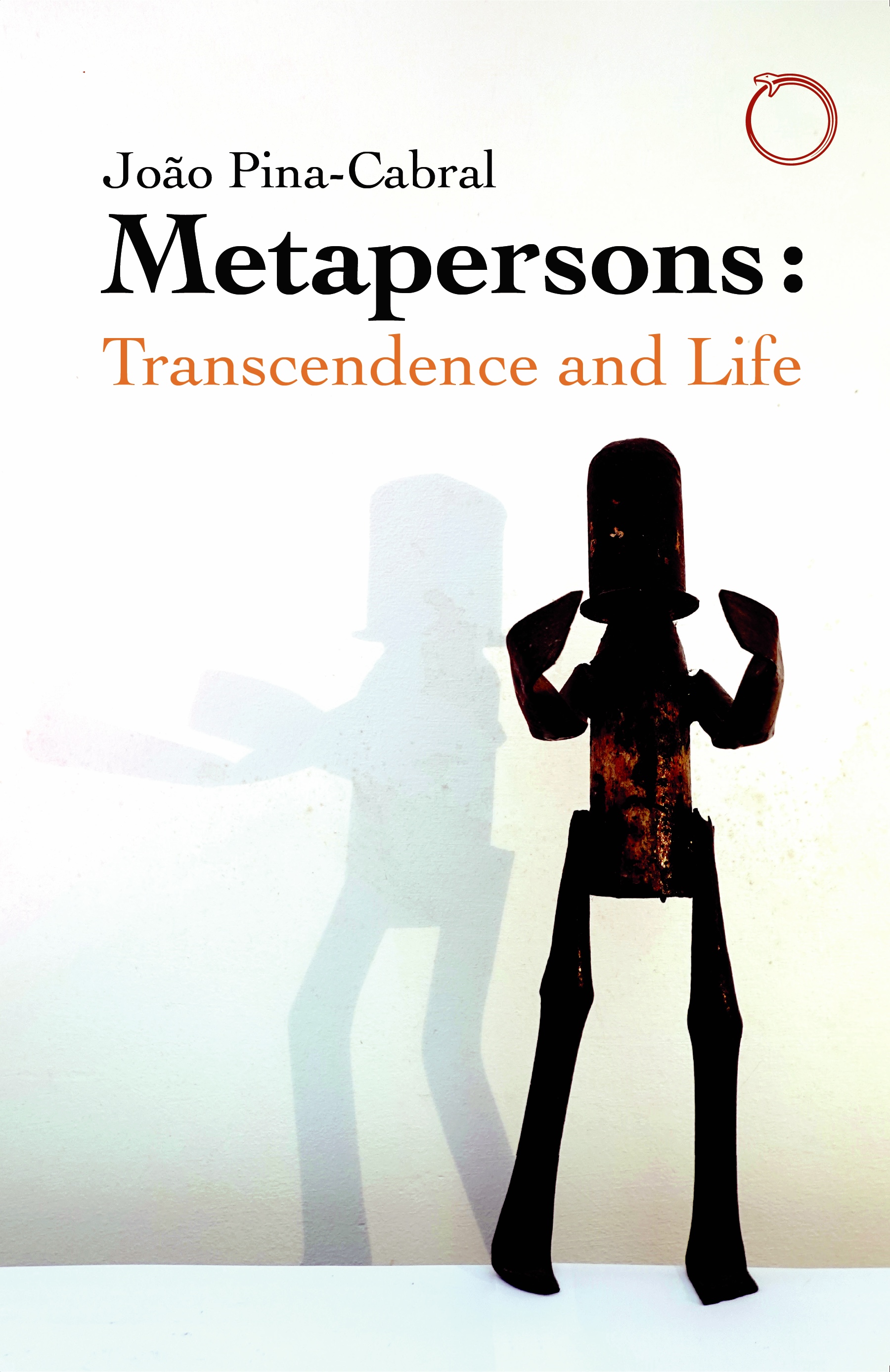
Metapersons begins from a simple yet striking observation: across the world, people live in the company of divinities, ancestors, spirits, sacred mountains, or enlivened statues. They pray with intensity, sense the presence of ghosts, and experience forms of coexistence with beings beyond the human. Drawing on fieldwork in Portugal, China, Mozambique, and Brazil, João Pina-Cabral shows how humans continually move beyond their embodied condition through lived relations with such entities.
Revisiting classic anthropological debates—from Durkheim and Mauss on prayer and the sacred to later critiques of religion—this book argues that a “new anthropological synthesis” has emerged in recent decades: one that understands transcendence as a fundamental feature of life itself. In this light, familiar categories such as “superstition” require reconsideration in new terms. Pina-Cabral develops a scalar model of life’s plurality, seeing personhood as the dynamic source of transcendence.
Engaging with contemporary debates across the life sciences, social sciences, and philosophy, Metapersons offers a groundbreaking, person-centered perspective on transcendence, animism, and spirituality. It challenges disciplinary boundaries while providing an innovative framework for rethinking prayer, religion, and the very conditions of human coexistence with the more-than-human world.
“Born from decades of ethnographic engagement and theorizing, this is a signature contribution to current efforts to rethink the philosophical foundations of our discipline. Its argument is that personhood is neither innate nor bestowed but the result of a capacity for transcendence that humans acquire from infancy as they are linguistically scaffolded and keyed into the affordances and constraints of social worlds. What is more, this species-specific capacity is the bedrock for the ubiquitous presence of metapersons in our midst—whether they be deities, chatbots, ancestors, or avatars. This book is full of fresh and striking insights for advancing what Pina-Cabral correctly sees as the need for a new anthropological synthesis.”
— Stephan Palmié, author of, most recently, Thinking with Ngangas: What Afro-Cuban Ritual Can Tell Us about Scientific Practice and Vice Versa
“A life in anthropology underpins this remarkable collection of essays by João Pina-Cabral. At once informative, highly readable, and provocative, its challenging perspective on contemporary anthropology confronts and throws into question the reader’s analytical assumptions. Particularly valuable is the discussion throughout of issues of personhood and transcendence that are bound to emerge from anthropological fieldwork and indeed in everyday life. It follows that the central value of these essays is their insistence on the unique and continuing contribution that ethnography makes to our knowledge of humankind. We are able to appreciate how the analyst’s theoretical perspective changes and develops over time to arrive at the overarching idea of metapersons that gives the collection its title. Likewise, and this is crucial for the student of anthropology, Pina-Cabral shows how fundamental are the historical underpinnings of our discipline and how profound their continuing significance.”
— Christina Toren, author of Mind, Materiality, and History: Explorations in Fijian Ethnography
João Pina-Cabral is Research Professor Emeritus at the University of Lisbon’s Institute of Social Sciences. He is the author of many works of ethnography and ethnographic theory, including World: An Anthropological Examination.
© HAU Books 2026
ISBN: 9781914363382
ISBN: 9781914363405 (PDF)
300 pages | 10 halftones | 6 x 9
$35
The open-access PDF of this book, attached above, is made available by Hau Books through a Creative Commons license BY-NC-ND 4.0 International (Attribution Required / Non-Commercial Use / No Derivatives). Additional rights clearance may be necessary for third-party content within.