
Hunting, Modernity, and the Crisis of the Wild
By Charles Stépanoff
Translated by Nora Scott
Modernity has divided animals into two categories: those deemed worthy of protection and affection, and those reduced to raw material for industry. How can we make sense of this strange split between protective love and intensive exploitation? Hunting, which both predates this opposition and continues to unsettle it, provides an exceptional vantage point from which to examine our contradictory relationship with living beings in the midst of an ecological crisis. Drawing on an immersive field study, Charles Stépanoff documents the accelerated erosion of rural biodiversity, and the paradoxical relationships between hunting, protection, and compassion. Over the course of this rich journey, he sheds new light on the anthropological and ecological foundations of the violence inflicted on living beings, as well as on the wild origins of political sovereignty. Ultimately, by questioning the peculiar moral hierarchy that this violence produces today, Stépanoff gives our moral and emotional perception a deeper field of vision.
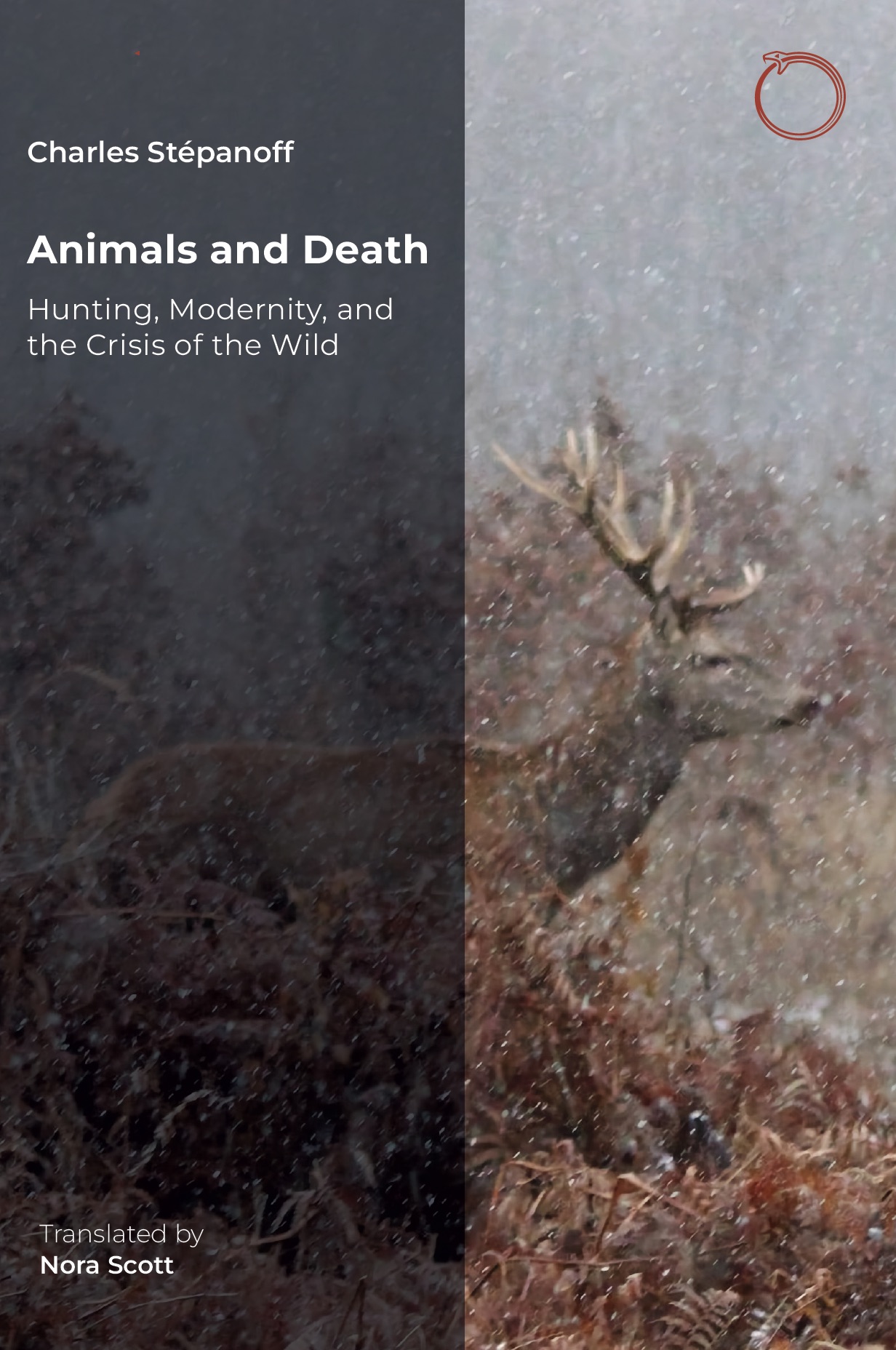
After Siberian shamanism, the anthropologist Charles Stépanoff turns to hunting in rural France—and discovers common ground.
Praise for the French edition:
“Hunting provokes scandal. But what is it exactly that so disturbs us? The living world is both more brutal and more rich than we can measure—and perhaps more than we can bear. By showing that hunters—those close yet distant figures—still have something vital to tell us, Stépanoff argues for a ‘pluralism of cosmologies and ways of life.’ Above all, he reminds us to face, without flinching, the otherness of people and of animals, the inexhaustible prodigality of life.”
— Florent Georgesco, Le Monde des livres, 5 December 2021
“The great merit of this work—beyond its evident anthropological value—is that it reopens the field and loosens the stranglehold of binary oppositions, even as the historical lens shows how heavily these weigh on the moral frameworks that shape our relations to nature. … It now stands as an essential reference for anyone seeking to understand a practice at once distant and familiar, one that joins direct engagement with the wild to the most intricate forms of symbolic organization.”
— Jean-Louis Fabiani, Books and Ideas
“Bringing together social anthropology and history, L’animal et la mort establishes its author as one of the keenest observers of the contradictions of modern life.”
— Youness Bousenna, Socialter, 26 October 2021
Charles Stépanoff is an anthropologist, a member of the Laboratoire d’Anthropologie Sociale at the Collège de France, and Directeur d’Études at the École des Hautes Études en Sciences Sociales, Paris. He was awarded the France Culture–ARTE essay prize in 2021, and the François Sommer literary prize in 2022 for his book Voyager dans l’invisible, published in translation as Journeys into the Invisible by Hau Books in 2025.
Nora Scott has translated numerous books in anthropology and related social sciences. In 2013, she was awarded the prestigious French-American Foundation Translation Prize.