
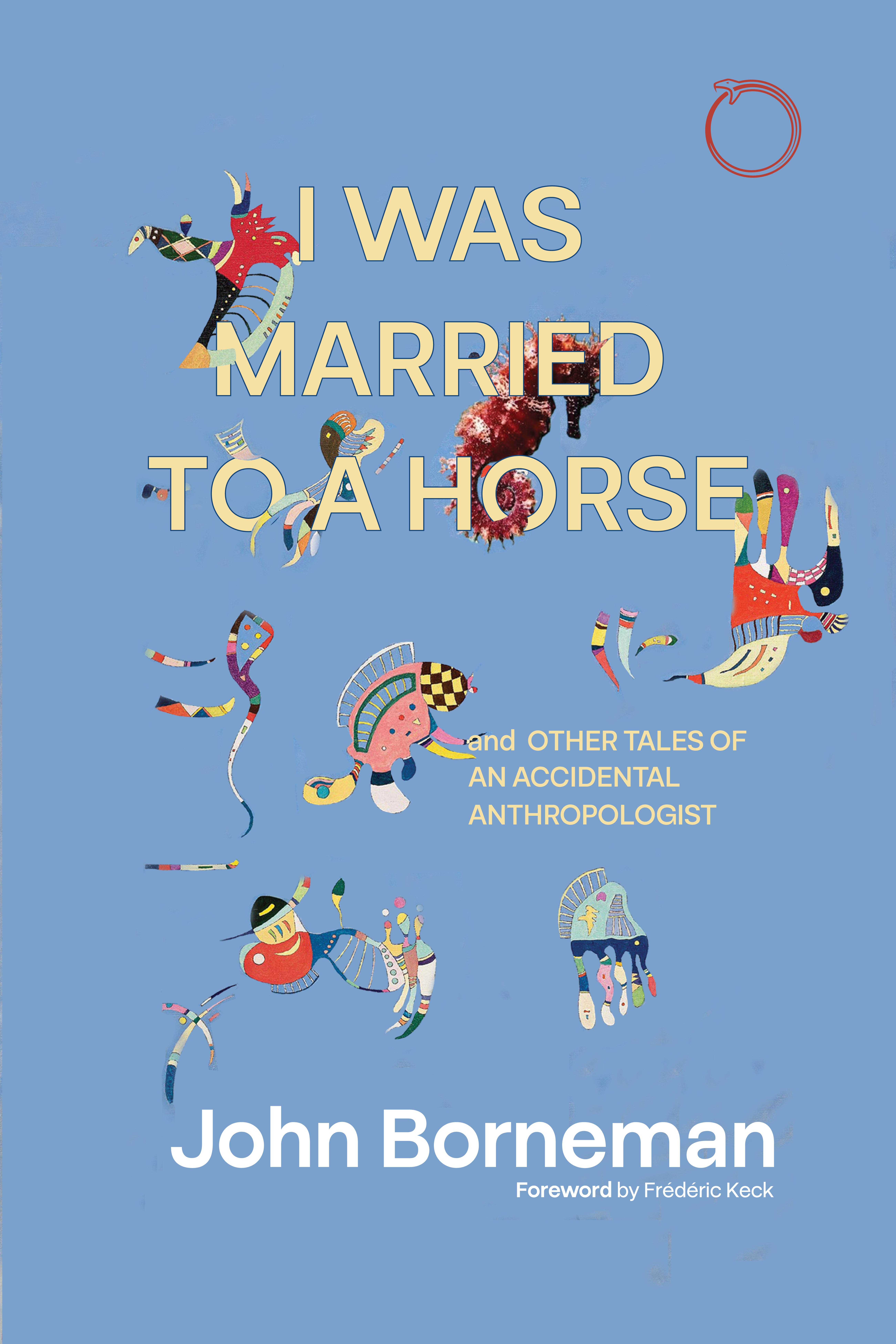
By John Borneman
Foreword by Frédéric Keck
How does the youngest of eight children, raised on a family farm in northern Wisconsin by parents with only half a grammar school education, become an Ivy League professor and a witness to some of the most transformative events of the late twentieth and early twenty-first centuries? In this remarkable memoir, John Borneman tells the story of his life as an “accidental anthropologist” with searing honesty, humor, and emotional depth.
Tracing a path from his upbringing as a queer farm boy to a career in anthropology, Borneman’s memoir reflects on social mobility, the decline of the American family farm, and shifting understandings of queerness and masculinity. Meanwhile, as a fourth-generation German American, his journey carried him to divided Berlin, where he captures the moods of East and West, and back again during the arrival of Syrian refugees—culminating in a long-standing friendship and a poignant reunion with a refugee he had first met years earlier.
Through these encounters, Borneman shows how empathy and attention can reveal the hidden textures of history, identity, and belonging. Rich in insight and humanity, this is a story of personal discovery, intercultural encounter, and the search for meaning in a rapidly changing world—one that speaks to scholars and general readers alike.
“This brave, witty, and vivid memoir of the journeys of a soul-searching anthropologist will appeal to all readers interested in how we find meaning in the map of memory as we look back on the intersection of our lives and the eruptions of history.”
— Ruth Behar, author of The Vulnerable Observer: Anthropology That Breaks Your Heart
“In this rich and triumphant ethnographic memoir rooted in the American settler heartland, John Borneman narrates his journey of queer becoming. Like a life travelogue of the country and world, from the Cold War era to the present, Borneman’s descriptions of touching, adventurous encounters with kin and kith of all kinds reveal how the beauty of ordinary curiosity can incite class, national, and sexual consciousness. In all, a moving retrospective that will inspire many readers.”
— Casey Golomski, author of God’s Waiting Room: Racial Reckoning at Life’s End
John Borneman is Emeritus Professor of Anthropology at Princeton University and the author of many books based on fieldwork in Central Europe and in the Middle East.
Frédéric Keck is a Senior Researcher at CNRS, author of How French Moderns Think: The Lévy-Bruhl Family, From “Primitive Mentality” to Contemporary Pandemics and Avian Reservoirs: Virus Hunters and Birdwatchers in Chinese Sentinel Posts, and coeditor of The Anthropology of Pandemics.